
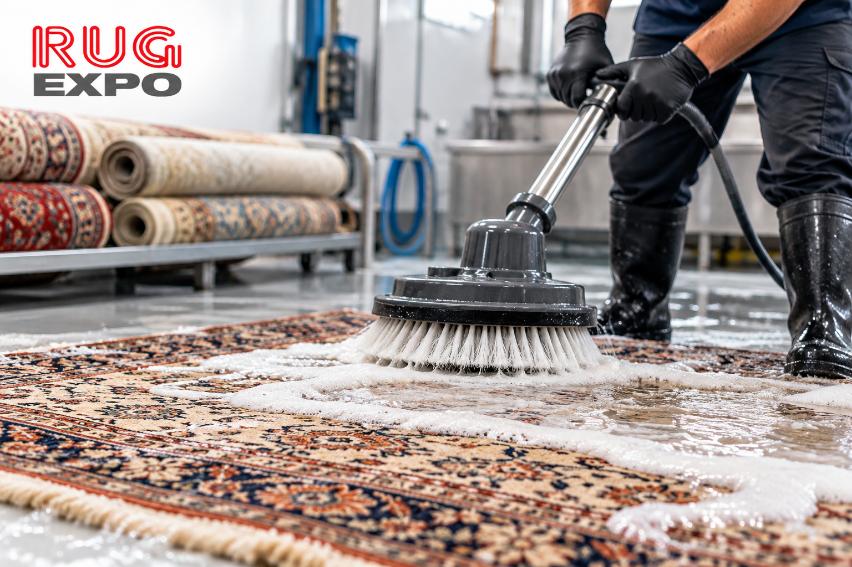
If you have ever wondered what happens when you send an area rug for professional cleaning, the process involves much more than simply applying a cleaning solution. Professional area rug cleaning typically includes inspection, dust removal, stain treatment, washing, rinsing, drying, and a final quality check.
The exact process depends on the rug’s material, construction, dyes, condition, and type of soiling. Understanding these steps can help homeowners know what to expect when choosing an area rug cleaning service, particularly for delicate, valuable, or heavily soiled rugs.
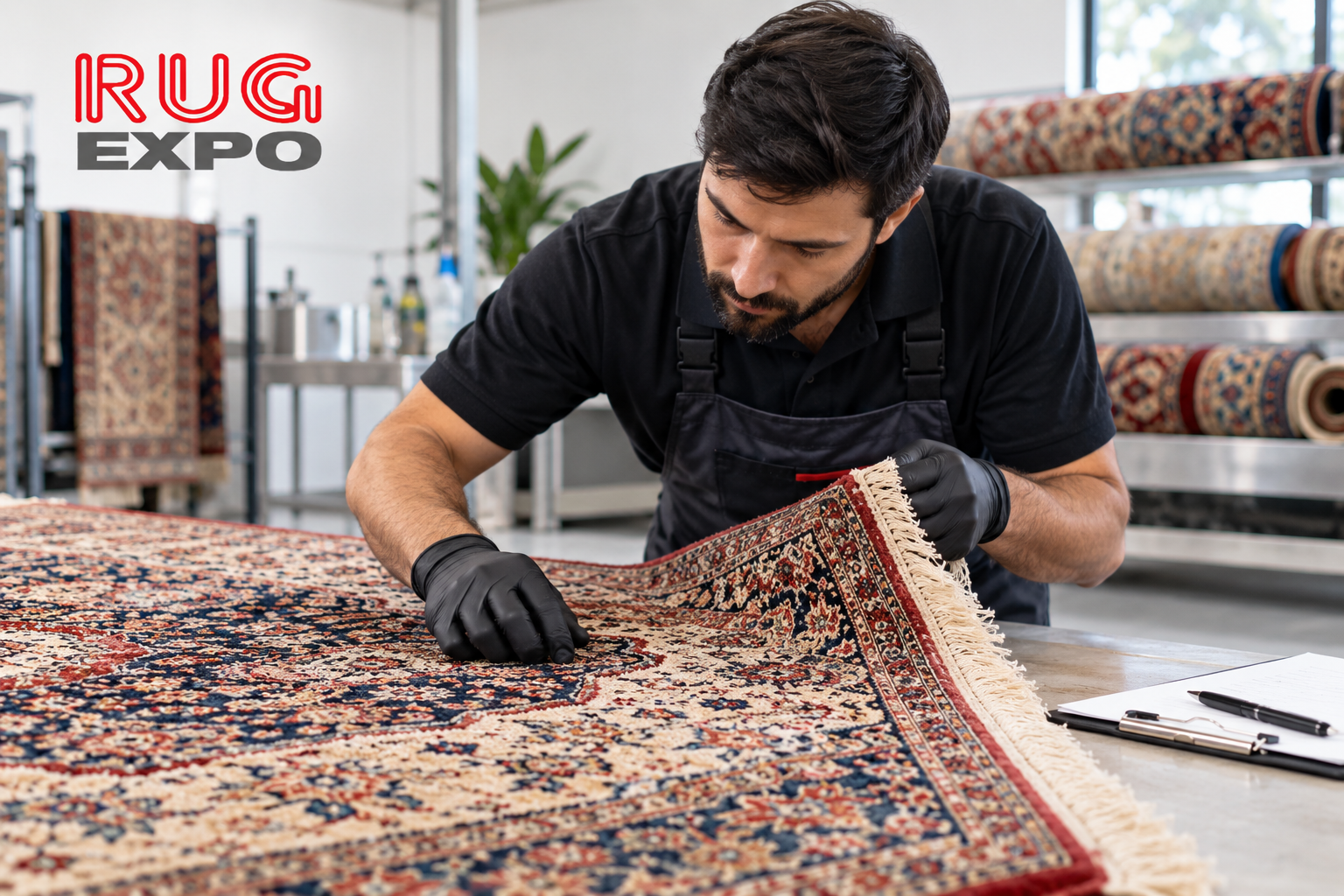
The first step in professional area rug cleaning is a detailed inspection.
A professional cleaner evaluates the rug’s:
Different rugs require different cleaning approaches. A wool rug, Persian rug, Oriental rug, or synthetic area rug may each have specific cleaning requirements.
The inspection also identifies existing damage or conditions that should be considered before cleaning begins.
Rugs can hold fine dust, sand, pet hair, and other dry particles deep within their fibers. Regular vacuuming removes some surface debris, but embedded soil may require more thorough treatment.
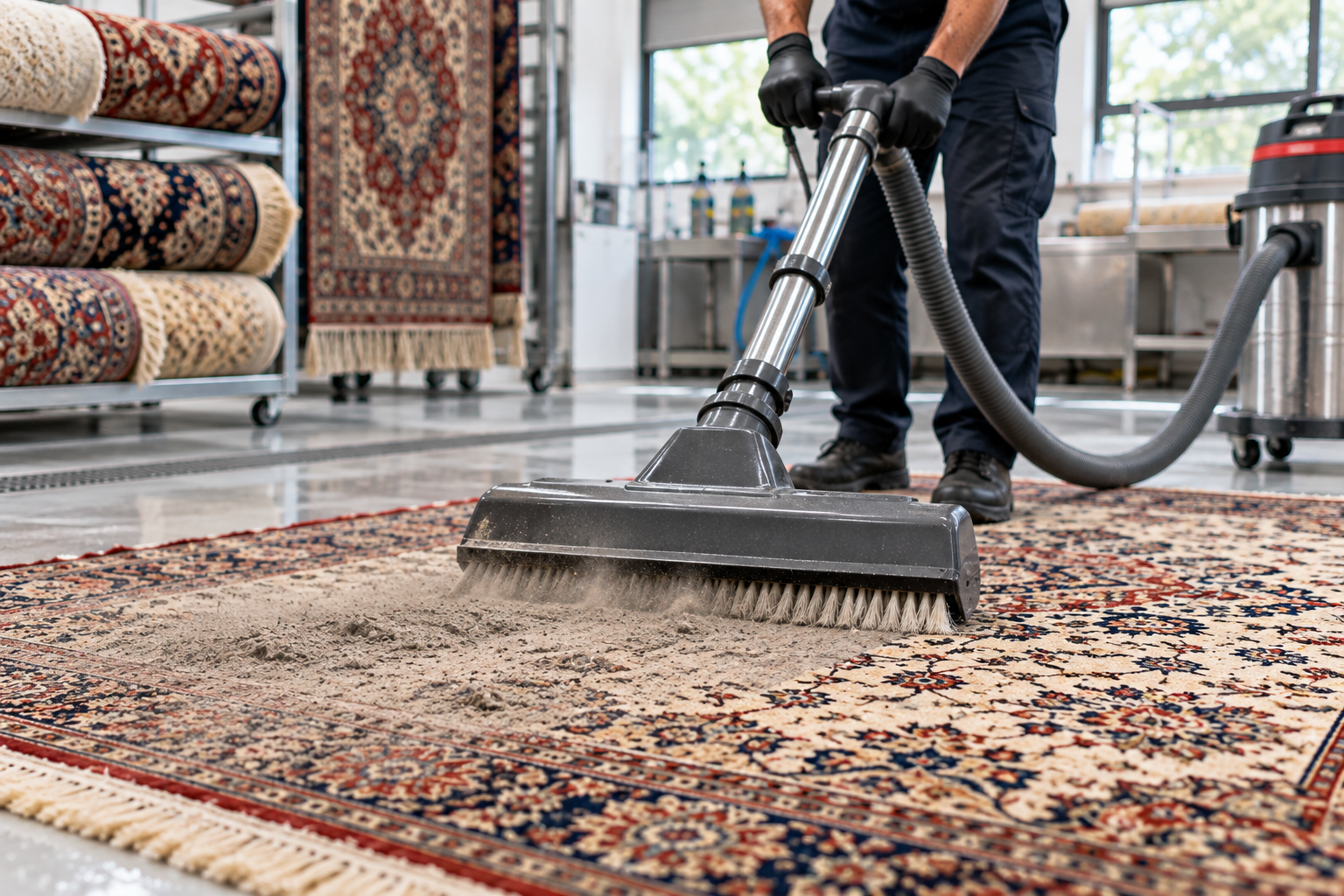
Before wet cleaning, loose dirt and dry soil are removed as much as possible. This prepares the rug for the next stage and helps prevent dirt from becoming further embedded during washing.
This step is especially important for rugs in busy areas of the home where repeated foot traffic pushes particles deeper into the pile.
After dry soil removal, stains and areas requiring additional attention can be treated.
Common problems include:
The appropriate treatment depends on both the stain and the rug material. A professional cleaner can determine which approach is suitable without unnecessarily exposing the entire rug to harsh products.
It is important to remember that not every stain can be completely removed. Older stains or stains that have chemically changed the fibers or dyes may be permanent.
One of the key differences between professional area rug cleaning and basic household cleaning is that the method can be selected according to the individual rug.
Factors such as fiber type, construction, dye stability, age, and condition influence the cleaning process.
For example, a wool rug may require different care than a synthetic rug. Persian and Oriental rugs can also require specialized handling because of their materials, dyes, construction, or age.
This is why area rugs should not automatically be treated in the same way as wall-to-wall carpeting.
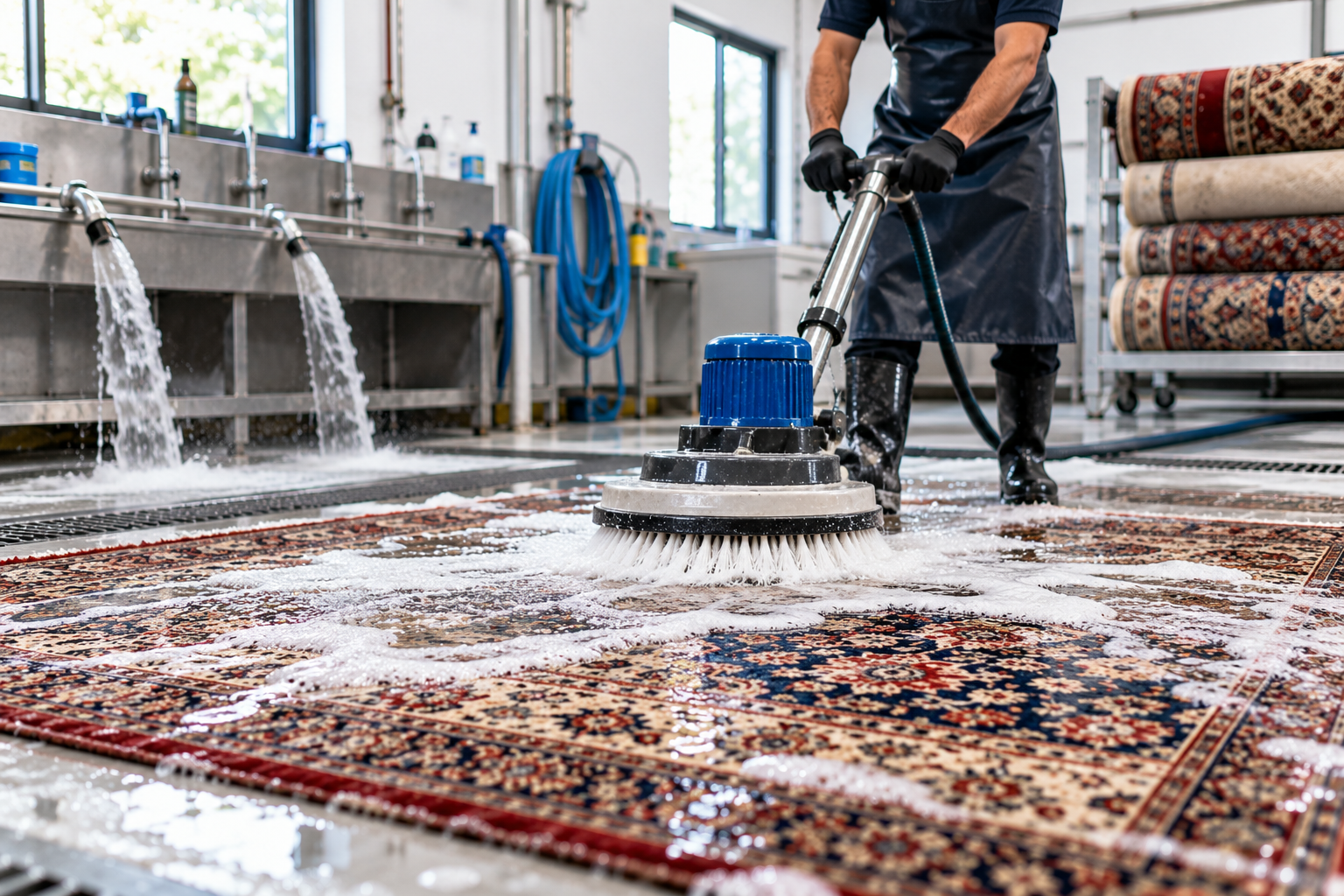
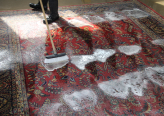
Once the rug has been inspected and prepared, the actual cleaning begins.
Depending on the rug and its condition, professional cleaning may involve specialized equipment, cleaning solutions, and controlled amounts of water.
The purpose is to loosen and remove accumulated dirt and contaminants from the fibers while taking appropriate care of the rug’s construction and dyes.
Professional equipment can provide a deeper cleaning than many household methods, particularly when dirt has become embedded in the rug over time.
The cleaning method should always be appropriate for the specific rug rather than based on a one-size-fits-all process.
After washing, the rug needs to be properly rinsed to remove loosened dirt, cleaning solution, and other residues.
Thorough rinsing is an important part of the cleaning process. Excess cleaning residue left in the fibers can affect the rug’s texture and may attract additional soil.
Professional cleaning equipment can help control the amount of water and cleaning solution used and assist with removing residue during the rinsing stage.
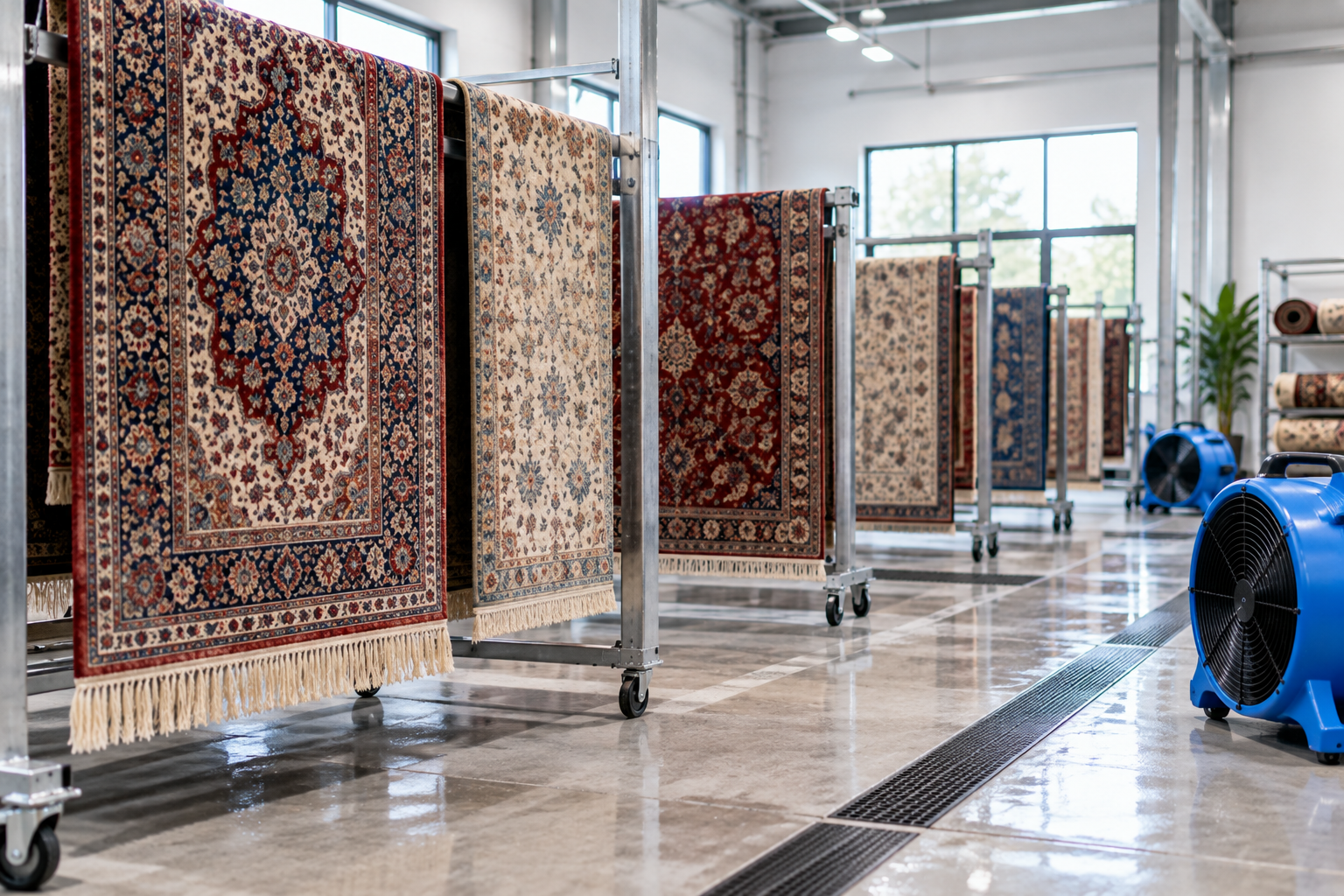
Drying is one of the most important stages of professional rug cleaning.
A rug that remains damp for too long can develop unwanted odors and moisture-related problems. Drying requirements can vary depending on the rug’s material, thickness, construction, and the amount of moisture used during cleaning.
Professional cleaners consider factors such as:
The goal is to dry the rug thoroughly while helping maintain its shape and condition.
Once the rug has been cleaned and dried, it can undergo a final inspection.
The cleaner may check for:
This final check helps ensure the rug is ready to be returned to the customer.
The time required for professional rug cleaning varies from rug to rug.
Factors that can affect turnaround time include the rug’s:
A heavily soiled or delicate rug may require more time than a smaller rug with light soil.
If you are looking for a rug cleaning service in San Diego, ask about the expected turnaround time when requesting an estimate.
No. Area rugs can vary significantly in material, construction, age, and condition.
Natural fibers such as wool may require specialized care, while Persian and Oriental rugs can have specific considerations involving dyes and construction. Synthetic rugs may also require a cleaning method appropriate for their particular material.
A professional inspection helps determine the safest and most suitable approach for each rug.
Regular vacuuming and prompt spill cleanup are important for everyday rug care, but they do not replace professional cleaning.
Home cleaning can also cause problems when the wrong cleaning product, excessive moisture, or unsuitable equipment is used. Delicate rugs may be particularly vulnerable to improper treatment.
Professional cleaning provides an opportunity for the rug to be evaluated before a cleaning method is selected. This can be especially useful for valuable, delicate, heavily soiled, or difficult-to-clean rugs.
Also read: How to Master Rug Routine Cleaning Without Damaging the Fibers
There is no single cleaning schedule that works for every rug. Cleaning frequency depends on household traffic, pets, children, rug material, and how frequently the rug is used.
Consider professional cleaning when you notice:
Regular vacuuming and immediate attention to spills can help maintain the rug between professional cleanings.
For homeowners searching for rug cleaning near me or an area rug cleaning service in San Diego, it is important to choose a cleaner familiar with different rug materials and construction types.
Rug Expo provides professional rug cleaning in San Diego for different types of area rugs, including wool, Persian, and Oriental rugs. Each rug can be evaluated based on its condition, material, and cleaning requirements.
Whether your rug has accumulated everyday dirt, developed odors, or needs attention after a spill, a professional evaluation can help determine the appropriate cleaning process.
Also Read: Rug Cleaning Near Me: Top Tips for Choosing a Local Pro
Professional area rug cleaning is a multi-step process designed around the characteristics of each rug. Inspection, soil removal, stain treatment, washing, rinsing, drying, and final inspection all contribute to a thorough cleaning process.
If you are considering professional rug cleaning in San Diego, having your rug evaluated by an experienced cleaning professional can help determine the appropriate approach for its material, condition, and cleaning needs.
The process generally includes inspection, dry soil removal, stain treatment, cleaning or washing, rinsing, drying, and a final inspection. The exact procedure depends on the rug’s material and condition.
Cleaning frequency depends on factors such as household traffic, pets, children, rug material, and use. Regular vacuuming can help maintain the rug between professional cleanings.
Wool rugs can require specialized care because of their natural fibers and construction. A professional should inspect the rug and select an appropriate cleaning method.
Drying time varies depending on the rug’s material, thickness, construction, moisture level, and environmental conditions. A professional cleaner can provide a more accurate timeframe after inspection.
No. Some stains may permanently affect fibers or dyes, particularly when they are old or have been chemically altered by previous treatments. Professional cleaning can improve many stains, but complete removal cannot always be guaranteed.
Yes. Area rugs can differ considerably in fiber, construction, dyes, backing, and age. These characteristics may require cleaning methods that differ from conventional carpet cleaning.









































Leave a Comment