
When you have a beautiful area rug in your home, keeping it clean is important, but so is knowing what is being used to clean it. Many homeowners searching for eco-friendly rug, cleaning natural rug cleaning, or non toxic rug cleaning want an effective cleaning process without unnecessary harsh chemicals.
But what do terms like “eco-friendly,” “chemical-free,” “natural,” and “organic” actually mean when it comes to professional rug cleaning?
The answer is more nuanced than simply choosing a cleaner labeled “green.” A truly responsible approach considers the cleaning products, water usage, rug fibers, drying process, and how the cleaning method affects the environment and your home.
Green rug cleaning generally refers to cleaning practices designed to reduce the use of harsh chemicals and minimize environmental impact while still effectively removing dirt, stains, odors, and allergens.
Depending on the cleaning company, this may include biodegradable or plant-based cleaning solutions, responsible water usage, reduced chemical residues, and environmentally conscious cleaning practices.
However, “green” is not a standardized term across the rug-cleaning industry. That means homeowners should look beyond the label and ask what products and processes are actually being used.
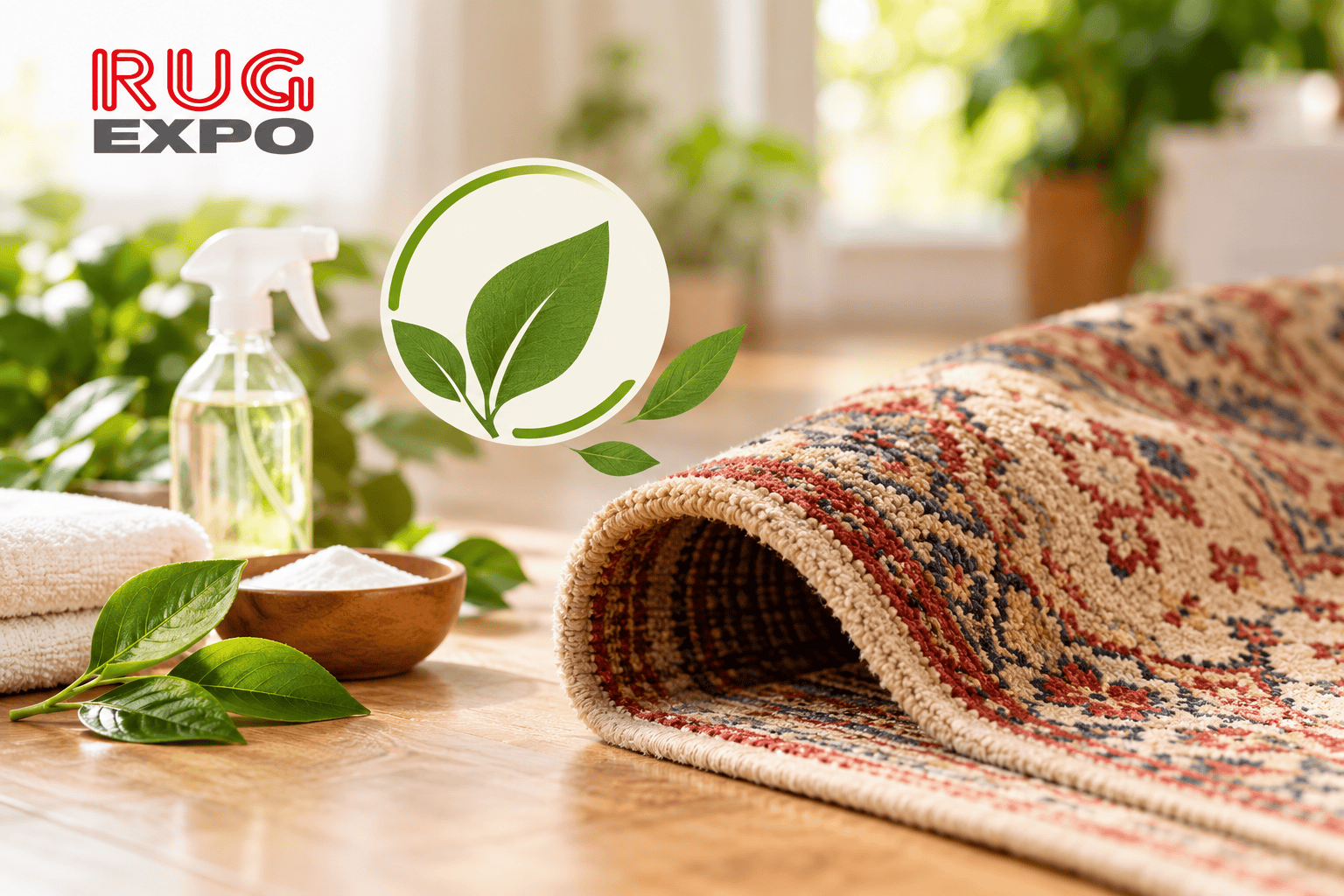
Natural rug cleaning typically refers to using cleaning products or methods derived from naturally occurring or plant-based ingredients instead of relying heavily on synthetic chemicals.
Natural cleaning products can be appealing to homeowners who are concerned about chemical exposure, particularly in homes with children or pets.
However, natural does not automatically mean better for every rug. Different materials require different cleaning methods. A solution that works well on a synthetic area rug may not be appropriate for wool, silk, Persian, or antique rugs.
Professional rug cleaning should always consider the rug’s:
The phrase chemical free rug cleaning can be confusing. Technically, everything around us, including water, is made of chemicals. In the cleaning industry, however, “chemical-free” is generally used to describe processes that avoid or minimize harsh, unnecessary, or potentially irritating cleaning chemicals.
Instead of focusing only on the phrase “chemical-free,” consumers should ask:
These questions provide a much better indication of whether a cleaning process is environmentally responsible.
Non toxic rug cleaning generally focuses on reducing exposure to potentially harmful substances while maintaining effective cleaning performance.
For homeowners, this can be particularly important when rugs are placed in bedrooms, children’s rooms, living areas, or spaces where pets spend a lot of time.
A non-toxic approach should not mean sacrificing cleaning quality. Professional cleaning still needs to remove embedded soil, stains, odors, and other contaminants.
The goal is to use an appropriate cleaning method that balances cleaning effectiveness, rug safety, and responsible product selection.
Also Read: What Happens During a Professional Area Rug Cleaning?
You may also see the term organic rug cleaner when researching environmentally conscious cleaning options.
The word “organic,” however, can mean different things depending on the product and how it is marketed. Consumers should not assume that every product described as organic is automatically suitable for every rug.
For specialty rugs, the cleaning method matters just as much as the product itself.
For example, wool, silk, Persian, and Oriental rugs can have delicate fibers and dyes that require specialized care. Using an inappropriate cleaning solution, even if it is marketed as natural or organic, could potentially cause color bleeding, fiber damage, or other problems.
A genuinely eco friendly rug cleaning approach should look at the entire cleaning process rather than focusing on one “green” product.
Important considerations can include:
Cleaning products should be selected based on the rug’s material and cleaning requirements. When appropriate, biodegradable or environmentally preferable solutions can help reduce unnecessary chemical impact.
Professional rug washing can involve significant amounts of water. Responsible water management and appropriate washing techniques can help reduce waste.
Cleaning doesn’t end when dirt is removed from the rug. The resulting wastewater should be handled responsibly rather than creating unnecessary environmental impact.
A proper drying process helps prevent lingering moisture, odors, mildew, and potential damage to the rug.
One of the most sustainable things you can do is keep a quality rug in use for longer.
Regular professional maintenance can help protect fibers and prevent dirt and stains from causing premature deterioration. Extending a rug’s usable life can reduce the need for frequent replacement.
Not every area rug should be cleaned using the same process.
Synthetic rugs, wool rugs, silk rugs, Persian rugs, Oriental rugs, and antique rugs can all have different cleaning requirements.
For example, natural fibers can respond differently to moisture and cleaning solutions than synthetic fibers. Delicate dyes may also require additional testing before a rug is fully cleaned.
This is why eco friendly area rug cleaning should still involve professional inspection and fiber identification.
A good cleaning process should prioritize the condition and construction of the rug, not simply the fact that a product is marketed as “green.”
Before booking a cleaning service, ask the company a few simple questions:
A reputable professional should be able to explain its process clearly instead of relying only on terms such as “green,” “natural,” or “organic.”
For homeowners searching for green rug cleaning in San Diego, choosing a professional rug specialist is especially important when the rug is valuable, handmade, antique, or made from delicate natural fibers.
A professional assessment can help determine the appropriate cleaning approach based on the rug’s material, construction, condition, and staining.
Whether you are looking for natural rug cleaning, non toxic rug cleaning, or an eco friendly area rug cleaning service, focus on the complete process rather than a marketing label.
The best cleaning method is one that effectively removes dirt and stains while protecting the rug and using appropriate cleaning practices.
Also Read: How to Remove Common Rug Stains: A Complete Stain Removal Guide
It depends on the cleaning products and process used. Ask the cleaning company which solutions are applied and whether they are appropriate for homes with pets.
“Chemical-free” is generally a marketing term rather than a literal scientific description. Ask whether the cleaner avoids harsh or unnecessary chemicals and what products are actually used.
Natural products are not automatically suitable for wool. Wool rugs require cleaning methods specifically appropriate for their fibers, dyes, and construction.
The terms are often used interchangeably. Both generally refer to cleaning practices intended to reduce environmental impact, but there is no universal process behind either term. Always check the actual products and methods used.
Not necessarily. The most appropriate cleaner depends on the rug’s material and condition. A professional should select a cleaning solution based on the specific rug rather than relying only on whether a product is labeled organic.
Final Thoughts
Eco-friendly rug cleaning is about more than finding a product labeled “natural” or “green.” It involves considering the cleaning solution, water usage, wastewater management, drying process, rug material, and overall longevity of the rug.
If you are comparing rug-cleaning services, ask questions about their products and processes before making a decision. For valuable or delicate rugs, professional assessment is particularly important.
Whether you’re searching for green rug cleaning, natural rug cleaning, chemical free rug cleaning, non toxic rug cleaning, or eco friendly rug cleaning, the goal should always be the same: clean your rug effectively while protecting its fibers and making responsible choices for your home and environment.














































Leave a Comment