
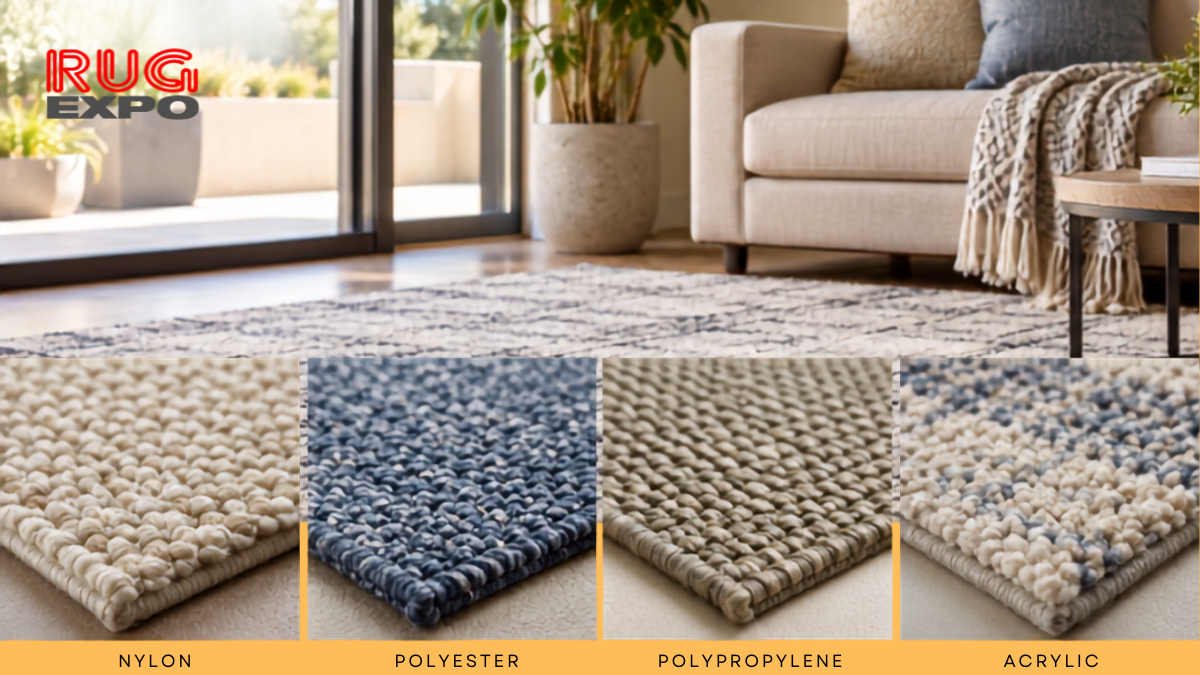
When choosing a rug, the material affects how it looks, feels, performs, and holds up over time. Synthetic rugs are popular because they offer a wide range of colors, patterns, textures, and price points while being practical for everyday spaces.
But not all synthetic fibers perform the same way. Nylon, polyester, polypropylene, and acrylic each have different characteristics that can make them better suited to particular rooms and lifestyles.
This guide explains the main synthetic rug materials, how they compare, and what to consider before choosing one for your home.
Synthetic rugs are made from man-made fibers rather than natural materials such as wool, cotton, jute, or sisal. Common synthetic rug fibers include nylon, polyester, polypropylene, and acrylic.
Manufacturers can engineer these fibers to provide specific characteristics such as softness, durability, color retention, stain resistance, or moisture resistance.
Synthetic rugs are commonly used in living rooms, bedrooms, dining areas, hallways, children’s spaces, and outdoor settings, depending on the fiber and construction.
Nylon rugs are known for their durability and ability to handle regular foot traffic. This makes nylon a practical option for busy areas of the home.
Key characteristics of nylon rugs:
Nylon fibers can recover relatively well from compression, making them useful in spaces where furniture and frequent foot traffic may flatten the rug over time.
Best for: Living rooms, hallways, family rooms, offices, and other high-use areas.
If durability is one of your main priorities, nylon is a synthetic fiber worth considering.
Polyester rugs are popular for their soft feel, attractive appearance, and wide range of colors.
Polyester fibers can produce rich, vibrant colors, making them suitable for rugs where visual appeal is an important consideration. They are often used to create plush or comfortable textures.
Key characteristics of polyester rugs:
Polyester may not be the first choice when maximum resilience is required for extremely busy areas, but it can work well in rooms where comfort and appearance are priorities.
Best for: Bedrooms, living rooms, guest rooms, and moderate-traffic spaces.
Polypropylene rugs are among the most widely used synthetic rug options. Polypropylene is valued for its practical characteristics, particularly in spaces where moisture and spills are concerns.
The fiber is commonly used for both indoor and outdoor rugs, including polypropylene outdoor rugs designed for patios, balconies, porches, and other covered or open-air spaces.
Key characteristics of polypropylene rugs:
Polypropylene can be a practical choice for households with children or pets, especially when easy maintenance is important.
Best for: High-use areas, dining spaces, children’s rooms, casual living spaces, patios, and outdoor areas where the rug is specifically designed for outdoor use.
However, outdoor suitability depends on the rug’s overall construction and backing—not simply the fiber itself.
Acrylic rugs are synthetic rugs designed to provide a look and feel that can resemble certain natural fibers, particularly wool.
They can offer a soft texture and good color options while providing a synthetic alternative to some natural-fiber rugs.
Key characteristics of acrylic rugs:
Acrylic can be useful when you want a softer decorative rug without choosing a natural fiber.
Best for: Bedrooms, decorative areas, living spaces, and rooms with moderate traffic.
As with any rug, the specific construction, pile, backing, and manufacturer’s care instructions should be considered before choosing an acrylic rug.
Here’s a quick comparison of the four common synthetic rug fibers:
| Feature | Nylon | Polyester | Polypropylene | Acrylic |
| Durability | High | Moderate | Good | Moderate |
| Softness | Moderate to good | High | Moderate | Good |
| Color variety | High | High | High | High |
| Stain resistance | Good | Good | Very good | Moderate |
| Moisture resistance | Good | Good | High | Moderate |
| High-traffic suitability | Excellent | Moderate | Good | Moderate |
| Outdoor suitability | Depends on construction | Depends on construction | Often suitable | Generally indoor-focused |
| Best known for | Durability | Softness & color | Practicality | Wool-like feel |
These characteristics can vary depending on the rug’s construction, pile height, backing, and manufacturing process, so the fiber alone should not determine your choice.
For busy areas, nylon and polypropylene are commonly considered practical choices.
Nylon is particularly useful when resilience and durability are important. Polypropylene can be attractive when easy maintenance, stain resistance, and moisture resistance are priorities.
For example, a hallway or frequently used family room may benefit from a durable nylon rug, while a dining area or casual family space may benefit from the practical characteristics of polypropylene.
Polypropylene is often chosen for areas where easy everyday maintenance is important. Its resistance to moisture and many common stains makes it a popular choice for busy households.
However, “easy to maintain” doesn’t mean a rug is maintenance-free. Regular vacuuming, prompt attention to spills, appropriate cleaning methods, and following the manufacturer’s care instructions are still important.
For delicate stains or rugs requiring specialized treatment, professional cleaning may be more appropriate than experimenting with household products.
The choice between synthetic and natural fibers depends on your priorities.
Natural fibers such as wool, cotton, jute, and sisal offer distinct textures and appearances. Synthetic fibers, on the other hand, can provide practical characteristics such as durability, stain resistance, moisture resistance, and design flexibility.
Consider a synthetic rug when you prioritize:
Consider natural fibers when the texture, traditional craftsmanship, natural appearance, or specific characteristics of materials such as wool or jute are more important to you.
Before buying a synthetic rug, consider these questions:
A frequently used hallway requires different performance characteristics than a guest bedroom.
If spills and messes are common, prioritize a material that is practical to maintain.
For outdoor applications, choose a rug specifically designed and constructed for outdoor conditions. Polypropylene is commonly used for outdoor rugs, but construction matters too.
Polyester and acrylic can provide softer textures, while nylon and polypropylene may be chosen more for performance and practicality.
Always check the manufacturer’s care instructions. Different fibers and rug constructions can respond differently to moisture, heat, and cleaning products.
There is no single best synthetic rug material for every home. Nylon can be a strong choice when durability is important, polyester can work well when softness and color are priorities, polypropylene offers practical performance for busy and moisture-prone spaces, and acrylic can provide a soft, wool-like alternative.
The right choice ultimately depends on where the rug will be used, how much traffic it will receive, the feel you want, and how much maintenance you’re comfortable with.
Understanding the differences between synthetic rug materials makes it easier to choose a rug that fits both your space and everyday lifestyle.
The most common synthetic rug fibers include nylon, polyester, polypropylene, and acrylic. Each has different characteristics related to durability, softness, color, moisture resistance, and maintenance.
Yes. Polypropylene can be a practical choice for busy homes because of its moisture-resistant and stain-resistant characteristics. It is also widely used in rugs designed for outdoor spaces.
Nylon is known for its durability and resilience, making it a popular choice for areas that experience frequent foot traffic.
Many polyester rugs have a soft and comfortable feel, making them popular for bedrooms, living rooms, and other spaces where underfoot comfort is important.
Many synthetic rugs are relatively easy to maintain, but cleaning requirements vary by fiber, construction, backing, and manufacturer. Always follow the rug’s care instructions.





























Leave a Comment