
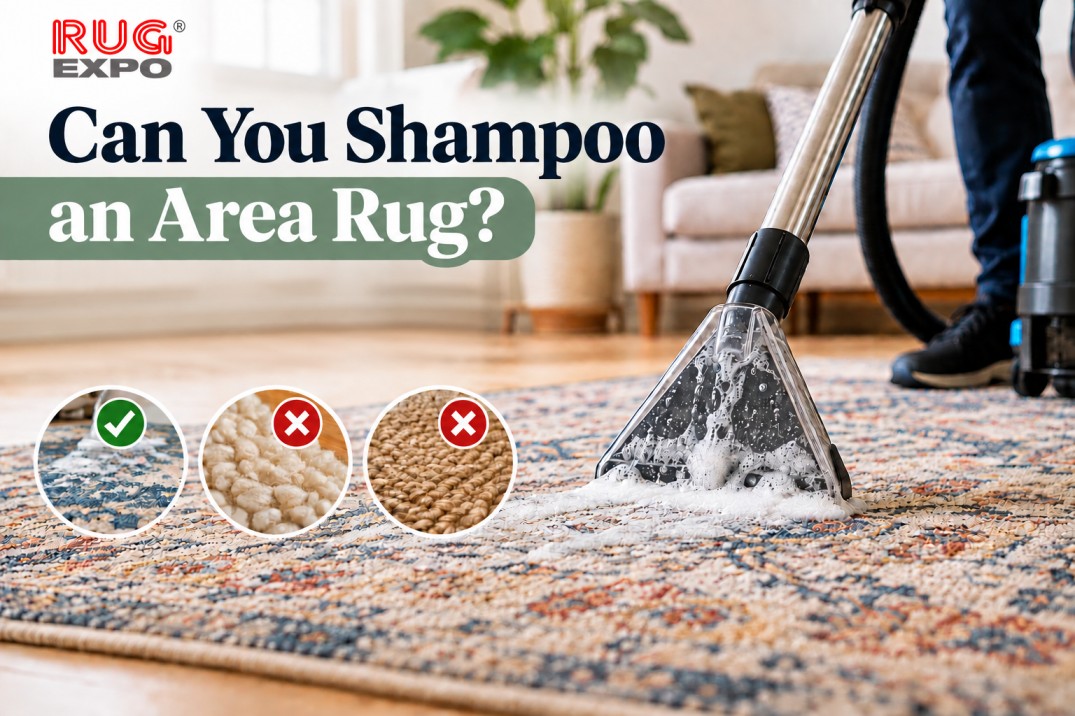
Area rugs can collect dust, dirt, pet hair, spills, and everyday grime. Regular vacuuming helps maintain them, but occasionally, a deeper cleaning may be necessary. This often leads homeowners to ask: Can I shampoo an area rug?
The answer depends on the rug. Some durable area rugs can be safely cleaned with the right shampooing method, while others can be damaged by excessive moisture, harsh cleaning products, or aggressive scrubbing.
Before you shampoo an area rug, it is important to identify its material, construction, backing, and care requirements. Understanding these factors can help you choose the right cleaning method and avoid unnecessary damage.
Yes, you can shampoo an area rug in some cases, but not every rug is suitable for shampooing.
Synthetic rugs made from materials such as polypropylene, polyester, and nylon are generally more tolerant of moisture and routine cleaning. However, delicate materials such as wool, silk, jute, viscose, and some handmade or antique rugs may require specialized cleaning.
Before using an area rug shampoo, check the manufacturer’s care instructions. You should also consider the rug’s:
If you are unsure about the material or cleaning requirements, professional rug cleaning can help prevent accidental damage.
The type of fiber plays an important role in determining whether an area rug shampoo is appropriate.
Polypropylene is a durable synthetic fiber commonly used for area rugs. Many polypropylene rugs can tolerate wet cleaning when the manufacturer’s instructions allow it.
However, avoid excessive moisture and allow the rug to dry completely after cleaning.
Polyester rugs can often be cleaned using products designed for synthetic fibers. Always test the cleaning solution on a small, hidden section before applying it to the entire rug.
Nylon is another durable synthetic material. Many nylon rugs can withstand deeper cleaning, but the backing and dye stability should still be considered.
Some cotton rugs can be washed or shampooed, while others may shrink, fade, or lose their shape when exposed to excessive water. Always follow the specific care instructions for your rug.
While some rugs can handle an area rug shampoo, certain materials require greater caution.
Wool rugs can be sensitive to excessive moisture, unsuitable detergents, and aggressive scrubbing. Some wool rugs can be professionally wet cleaned, but using a standard carpet shampooer at home may not be appropriate.
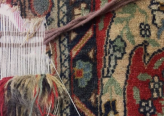
Persian and Oriental rugs may have handmade construction, natural fibers, and dyes that require careful handling. These rugs should not automatically be treated like ordinary synthetic carpeting.
Silk is a delicate fiber that can be affected by water, chemicals, and aggressive cleaning. DIY shampooing is generally not recommended for delicate or valuable silk rugs.
Jute and sisal are natural plant fibers that can react poorly to excessive moisture. Wet cleaning may cause discoloration, texture changes, or dimensional changes.
Viscose is particularly sensitive to moisture and improper cleaning techniques. Using the wrong cleaning method can affect the rug’s appearance and texture.
Antique and handmade rugs may contain delicate fibers, unstable dyes, previous repairs, or weakened areas. Because these rugs can be difficult to replace, professional cleaning is often the safer choice.
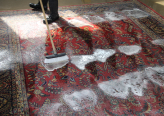
A common question is: Can I shampoo an area rug using a carpet-cleaning machine?
Sometimes, but it depends on the rug.
Carpet-cleaning machines are primarily designed for wall-to-wall carpeting, while area rugs can have different fibers, backing materials, construction, and dye characteristics.
Using too much water or aggressive agitation can damage certain rugs. Moisture can also pass through the rug and affect hardwood, laminate, or other moisture-sensitive flooring.
If the rug is approved for machine cleaning, follow the equipment manufacturer’s instructions and use a cleaning product suitable for the rug’s material.
Using the wrong cleaning method can create problems that are more difficult to fix than the original stain.
Color Bleeding
Some dyes can migrate when exposed to water or cleaning chemicals. This can cause colors to run into neighboring areas of the rug.
Shrinkage or Distortion
Certain natural fibers can change size or shape when they become wet.
Fiber Damage
Harsh cleaning chemicals, excessive brushing, or aggressive machine cleaning can affect the rug’s texture and appearance.
Backing Damage
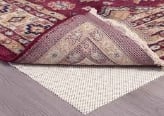
Too much moisture can weaken adhesives or backing materials used in some rugs.
Cleaning Residue
Using too much shampoo or failing to remove cleaning solution properly can leave residue behind, causing the rug to feel sticky or attract more dirt.
Slow Drying
A heavily saturated rug can take a long time to dry. Poor drying conditions can contribute to unpleasant odors and other moisture-related problems.
If you are concerned about using water, you may have come across dry shampoo for rugs.
Dry-cleaning or low-moisture products can be useful for certain rugs and situations, but they are not automatically safe for every material. A dry cleaning product still needs to be compatible with the rug’s fiber, dyes, and construction.
Dry methods may be considered when:
However, dry shampoo is not a universal replacement for professional deep cleaning. Heavily soiled rugs, difficult stains, delicate materials, and valuable rugs may require a more specialized process.
If your rug’s care instructions allow shampooing, follow these steps:
Confirm that the rug can be wet cleaned or shampooed.
Remove loose dirt, dust, hair, and debris before applying any cleaning solution.
Apply a small amount of your chosen area rug shampoo to an inconspicuous section. Check for color bleeding, fading, or texture changes.
More cleaning product does not necessarily mean a cleaner rug. Follow the product instructions and avoid oversaturating the rug.
Extract or remove as much moisture as the cleaning method recommends.
Good airflow is important. Do not place a damp rug back on the floor or under furniture.
If the rug shows an unusual reaction during testing, stop the cleaning process and consider professional cleaning.
There is no universal schedule for shampooing every rug.
Cleaning frequency depends on foot traffic, pets, children, spills, indoor conditions, rug material, and location. Rugs in busy living rooms, hallways, and entryways may require more frequent cleaning than rugs in low-traffic areas.
Regular vacuuming and prompt treatment of spills can reduce the need for frequent deep cleaning.
Instead of shampooing simply because a certain amount of time has passed, look for signs such as:
DIY area rug cleaning can be suitable for some durable synthetic rugs. However, professional cleaning may be a better option when the rug is:
A professional cleaner can evaluate the rug’s material, construction, dyes, condition, and stains before choosing an appropriate cleaning process.
If you are unsure whether you should shampoo an area rug, professional evaluation can help you choose a safer cleaning method.
Rug Expo in San Diego provides professional area rug cleaning for different rug materials and cleaning requirements. Instead of using the same cleaning method for every rug, the cleaning approach can be selected according to the rug’s material, construction, condition, and level of soiling.
Professional cleaning can be particularly helpful for delicate, handmade, antique, valuable, or heavily soiled rugs.
Yes, some area rugs can be shampooed, particularly durable synthetic rugs. Always check the manufacturer’s care instructions and test the cleaning product first.
You may be able to shampoo an area rug at home if it is designed for wet cleaning. Delicate, antique, handmade, and valuable rugs may require professional cleaning.
The appropriate shampoo depends on the rug’s fiber and manufacturer’s recommendations. Always use a product specifically designed for the material and test it in an inconspicuous area first.
Some rugs may be suitable for low-moisture or dry-cleaning products. However, check the manufacturer’s instructions because dry shampoo is not appropriate for every rug.
Some wool rugs can be professionally wet cleaned, but DIY shampooing can cause problems such as dye bleeding, excessive moisture, or fiber damage.
Many polypropylene rugs can tolerate shampooing when their care instructions allow wet cleaning. Avoid excessive moisture and make sure the rug dries completely.
































Leave a Comment