
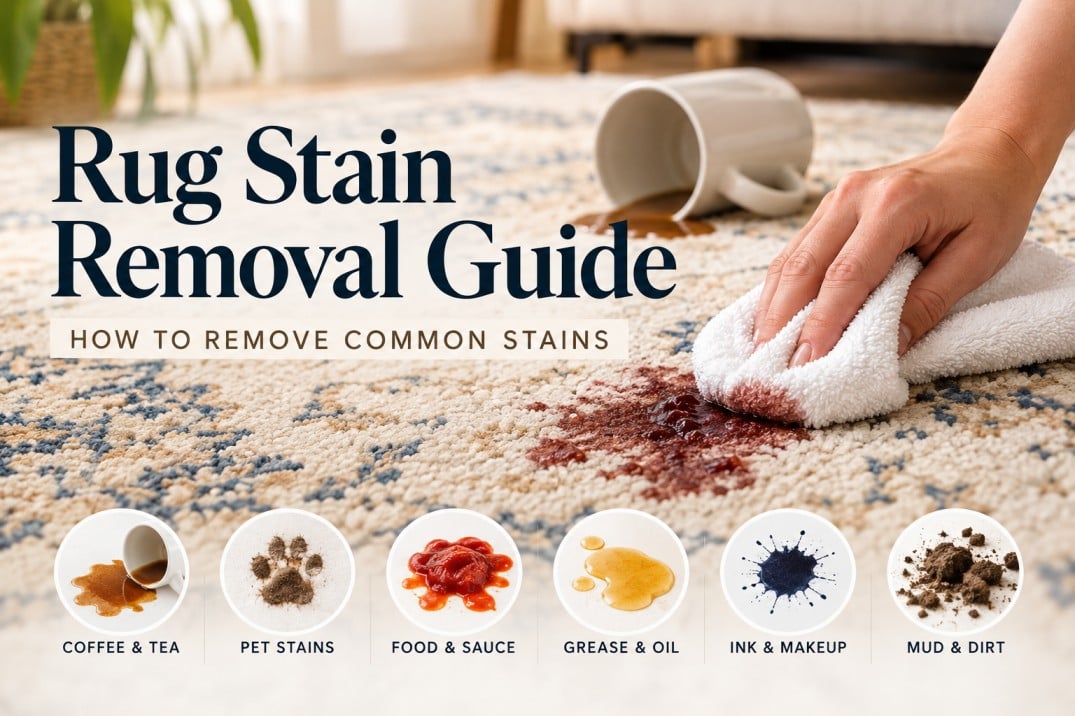
Spills and stains are part of everyday life. Coffee gets knocked over, pets have accidents, food drops, and muddy shoes can leave marks on an otherwise clean rug. The good news is that a fresh spill does not always mean your rug is permanently damaged.
The key to successful rug stain removal is knowing what caused the stain, understanding the rug’s material, and choosing the least aggressive cleaning method. A treatment that works on a synthetic rug may not be appropriate for wool, silk, jute, or an antique hand-knotted rug.
This guide explains what to do when common stains happen, what mistakes to avoid, and when professional cleaning is the safer choice.
The first few minutes can make a difference.
For most fresh liquid spills:
Do not immediately reach for a strong household cleaner. Rugs vary significantly in fiber, dye, backing, and construction, so the safest treatment depends on the specific rug.
Before attempting DIY stain cleaning, check the rug’s label or determine whether it is made from wool, silk, cotton, jute, synthetic fibers, or another material.
Also consider how the rug was made.
A machine-made synthetic rug may tolerate a different cleaning approach than a hand-knotted Persian or Oriental rug. Natural dyes can react differently to moisture and cleaning products, while plant-based fibers such as jute can be particularly sensitive to excess water.
If you cannot identify the fiber or are dealing with an older, valuable, handmade, or delicate rug, avoid experimenting with multiple cleaning products.
Different stains require different approaches. Instead of using one universal cleaning mixture, start by identifying the substance involved.
Coffee and tea can leave noticeable discoloration, particularly when a spill is allowed to dry.
First, blot as much of the liquid as possible using a clean white cloth. Avoid vigorous rubbing. If the rug’s care instructions permit spot cleaning, use a small amount of an appropriate mild cleaning solution and continue blotting.
Do not saturate the rug. Excess moisture can travel into the backing and make drying more difficult.
Also Read: DIY Methods for Removing Coffee Stains from a Synthetic Rug
Pet accidents require attention to both the visible mark and any liquid that has penetrated below the surface.
Blot fresh urine as quickly as possible and remove solid material before treating the area. Avoid applying excessive water or repeatedly scrubbing the same spot.
If an odor remains after surface cleaning, the contamination may have reached deeper layers of the rug. In those situations, professional treatment may be more appropriate than repeated DIY applications.
Rug Expo offers specialized rug cleaning and stain-treatment services in San Diego for rugs that need more extensive care. Its premium cleaning process is specifically promoted for heavily soiled or stained rugs and includes a longer stain-removal process.
Also Read: Will Professional Rug Cleaning Remove Pet Stains?
Grease and oil can be difficult because they do not behave like ordinary water-based spills.
Start by carefully removing any excess material from the surface without spreading it. Avoid immediately adding large amounts of liquid, which can move the substance further into the rug.
Because the appropriate treatment varies according to the fiber and dye, stubborn oil stains are often better assessed before applying household products.
For food spills, gently lift away solid pieces first. Do not grind them into the pile.
For a liquid or sauce stain, blot from the outside inward using a clean cloth. If the rug is suitable for spot cleaning, follow its care instructions and use a minimal amount of an appropriate solution.
Tomato-based sauces and strongly colored foods can be more difficult to remove once they dry, so prompt attention is helpful.
Also read: How to Clean Red Wine from a Rug Without Damaging the Fibers
Ink, foundation, lipstick, and other cosmetic stains can contain pigments, oils, or solvents that respond poorly to improvised cleaning.
Do not scrub these stains aggressively. Rubbing can enlarge the affected area and potentially damage the pile.
For valuable or delicate rugs, professional assessment is preferable to trying several household remedies one after another.
Mud is one of the stains where patience can help.
If the mud is wet, avoid spreading it across the rug. Once it has dried sufficiently, carefully remove loose material before vacuuming or spot-cleaning according to the rug’s care instructions.
Using excessive water to immediately wash a muddy patch can turn loose dirt into a deeper, harder-to-remove mess.
Some of the most common stain-removal mistakes come from trying to clean too aggressively.
Avoid:
The goal is not simply to make the stain disappear temporarily. The treatment should also avoid creating color bleeding, texture changes, water damage, or other problems.
DIY spot cleaning can make sense for a small, fresh spill on a rug that is known to be suitable for home treatment.
Professional help becomes more important when:
A professional cleaner can evaluate the rug’s construction and condition before selecting a cleaning process.
San Diego homeowners have access to a wide variety of rug types, from everyday synthetic area rugs to Persian, Oriental, wool, and other handmade pieces. Each can require a different approach to cleaning.
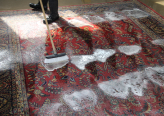
Rug Expo’s San Diego cleaning facility provides several rug-cleaning options, including basic and premium cleaning services. Its cleaning process includes inspection, dust removal, washing, rinsing, drying, and finishing. The company also specifically lists stain and odor treatment among its services.
For a valuable or delicate rug, getting professional advice before experimenting with household treatments can help reduce the risk of accidental damage.
Also Read: What Happens During a Professional Area Rug Cleaning?
For most fresh liquid spills, start by blotting with a clean white cloth rather than rubbing. The correct cleaning solution depends on the rug’s material, dyes, and construction.
Some old stains can be reduced or removed, but results depend on the substance, how long it has been present, the rug’s fibers, and previous cleaning attempts.
Do not assume vinegar is appropriate for every rug. Some rug materials and dyes can react differently to household cleaning solutions. Always check the care instructions and test an appropriate solution before treating a visible area.
Generally, aggressive scrubbing should be avoided. It can spread the stain, damage fibers, or alter the appearance of the pile.
Consider professional cleaning when the stain is persistent, the rug is valuable or delicate, the spill has penetrated deeply, odors remain, or you are uncertain about the safest treatment.



























































Leave a Comment