
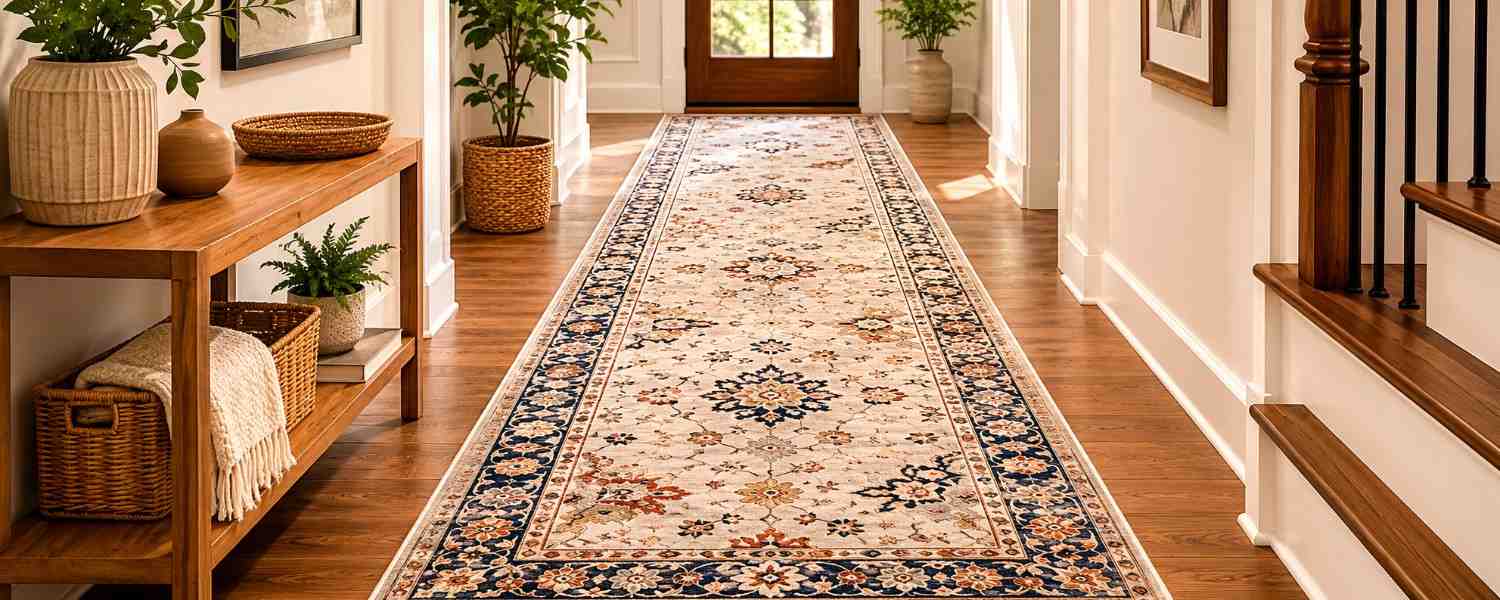
The ideal hallway runner rug width leaves 4 to 6 inches of visible flooring on each side. Most hallway runners are 2’6″ to 3′ wide, making them suitable for standard hallways. Choosing the right width creates visual balance, improves safety, and helps your hallway feel professionally designed rather than crowded.
Most hallway runner rugs are approximately 2 to 3 feet wide, with 2’6″ and 3′ being common choices for standard residential hallways. The ideal width depends on the hallway’s total width and the amount of flooring you want visible along each side.
For most hallways, leave approximately 4–6 inches of exposed flooring on both sides of the runner. Wider hallways may accommodate a 3- or 4-foot runner, while narrow hallways generally work better with a 2- or 2’6-foot runner.
The best hallway runner width depends on the width of your hallway.
For most homes:
| Hallway Width | Recommended Runner Width |
| 3 to 4 feet | 2′ to 2’6″ |
| 4 to 5 feet | 2’6″ to 3′ |
| 5+ feet | 3′ to 4′ |
The goal is to leave visible flooring on both sides of the runner.
Golden Rule
Leave approximately: 4–6 inches of floor visible on each side
This creates a balanced and designer-approved appearance.
Read our blog –Modern Rugs: Why shop at a Local Rug Store
| Hallway Width | Recommended Runner Width | Approx. Floor Border |
|---|---|---|
| 36 inches | 24 inches | 6 inches per side |
| 42 inches | 30 inches | 6 inches per side |
| 48 inches | 36 inches | 6 inches per side |
| 60 inches | 36–48 inches | 6–12 inches per side |
Many homeowners focus on runner length but overlook width.
The wrong width can make a hallway feel:
The right width helps:
For a 3-foot-wide hallway, a runner approximately 2 feet wide can work well, leaving about 6 inches of visible flooring along each side. If the hallway is particularly narrow or has doors that open into the walkway, check the clearance before selecting the final rug width.
A hallway that is approximately 4 feet wide can typically accommodate a 2’6″ to 3-foot-wide runner. A 2’6″ runner leaves more visible flooring, while a 3-foot runner creates a fuller appearance.
Choose the width based on your preferred border around the rug and whether doors, furniture, or other fixtures reduce the usable hallway space.
Step 1: Measure Hallway Width
Measure from wall to wall.
Step 2: Subtract Border Space
Leave:
Step 3: Determine Ideal Runner Width
Example:
Hallway Width = 48 inches
Visible Flooring:
Recommended Runner Width:
This creates the perfect visual proportion.
| Hallway Width | Recommended Runner Width |
| 36 inches | 24 inches |
| 42 inches | 30 inches |
| 48 inches | 36 inches |
| 60 inches | 36–48 inches |
Read our blog – Top 10 Hallway Runner Rug Styles That Are Trending
A hallway runner should not touch the walls. Because A wall-to-wall runner often makes the hallway look:
Best Practice
Maintain visible flooring borders around the rug.
This creates:
Best Widths for Narrow Hallways
| Hallway Type | Runner Width |
| Narrow Hallway | 2 feet |
| Standard Hallway | 2’6″ |
| Wide Hallway | 3 feet |
Designer Tip
Choose rugs for narrow hallways:
These make hallways feel larger and brighter.
Read our blog – 5 Best Area Rugs for Stylish Living Rooms
Wide hallways need larger runners to avoid looking undersized. Recommended Widths for runner rugs are 3 feet and 4 feet
A small runner in a large hallway can appear disconnected and visually insignificant so use large runner rugs because it helps –
| Feature | Narrow Runner | Wide Runner |
| Best For | Compact hallways | Large hallways |
| Width | 2’–2’6″ | 3’–4′ |
| Visual Effect | Opens space | Anchors space |
| Flooring Visibility | More | Less |
| Traffic Flow | Excellent | Excellent |
Because hallways experience constant foot traffic, durability matters.
Best Materials
A highly durable and stain-resistant material, polypropylene is perfect for busy hallways and high-traffic areas. It’s budget-friendly, easy to clean, and holds up well against daily wear, making it a practical choice for families.
Polyester rugs offer a soft, comfortable feel underfoot while remaining easy to maintain. They resist fading and are ideal for adding a cozy, stylish touch to hallways without requiring high maintenance.
Wool is a premium rug material known for its natural durability and long-lasting performance. It provides excellent comfort, resists dirt naturally, and adds a high-end, timeless look to any hallway.
Washable rugs are designed for convenience, making them perfect for homes with kids and pets. They’re easy to clean, low-maintenance, and ideal for keeping high-traffic areas looking fresh and hygienic.
For hardwood flooring, the right width helps protect the floor while maintaining visual balance.
Benefits
Reduces scratches
Minimizes wear patterns
Softens foot traffic noise
Improves safety
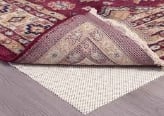
Pairing your runner with a rug pad offers additional floor protection.
Read or blog : How to Select a Rug Pad
The hallway feels cramped.
The rug looks undersized and disconnected.
Visible flooring is essential for balance.
Always measure before shopping.
Interior designers often use the “4–6 inch rule” when selecting hallway runner widths.
This simple guideline helps ensure:
The best hallway runners complement the space rather than overwhelm it.
Choose:
Choose:
Choose:
Choosing the right hallway runner isn’t just about length, the width, material, and durability all play a key role in how your space looks and functions. A well-fitted runner can instantly make your hallway feel more open, balanced, and professionally designed. That’s why selecting from a trusted, curated collection matters.
At Rug Expo, you’ll find hallway runner rugs thoughtfully designed for real homes, whether you have a narrow corridor or a wide, open hallway. Their collection includes a variety of widths, styles, and materials to match modern, traditional, and transitional interiors, making it easy to find the perfect fit for your space.
With the right combination of style, durability, and sizing options, Rug Expo makes it easy to upgrade your hallway with a runner that not only looks great but performs well every day.
Rug Sizing & Placement
Hallway & Entryway Guides
Rug Care & Accessories
Most hallway runners should leave 4–6 inches of visible flooring on each side.
The most common hallway runner widths are 2’6″ and 3′.
No. Leaving visible flooring creates better visual balance.
A 2-foot or 2’6″ runner works best in narrow hallways.
Yes. A runner that is too wide can make the hallway feel crowded.
Measure the hallway width and leave approximately 4–6 inches of floor visible on both sides.



















































Leave a Comment